Ai Doctor
ORIGINAL RESEARCH: Consumer Motivations For Using An Online AI Doctor
By Albert DiPiero, MD MPH FACP4 min read
Background
There is very little research documenting the factors motivating health consumers (eg, patients and caregivers) in their use of AI doctor online tools in real-world scenarios. Instead, most results on this topic today come from very controlled research in artificial settings, often with actors as patients.(1) The views and motivations of real world consumers with regard to AI in healthcare continue to evolve.(2) Many users appear willing to use AI for self-diagnosis.(3) As AI medical tools become increasingly available to health consumers, it becomes critical to understand the consumer factors and characteristics driving their use.
Here we present an observational analysis of real world consumers who have interacted with CodyMD (cody.md), an AI doctor. CodyMD allows consumers to have a clinical conversation with an AI doctor that has been trained by licensed U.S. physicians. CodyMD returns to the consumer a list of the top three potential causes for their symptoms along with corresponding possible remedies including health care professional referrals. This research is an analysis of the written feedback of sequential users commenting on their experience with CodyMD.
Methods
CodyMD is a proprietary AI chatbot. A consumer can access CodyMD online at no charge. CodyMD inquires about the consumer's symptoms and obtains a focused medical history in conversational style. CodyMD then presents the consumer with a list of possible conditions and if the consumer wishes to proceed, CodyMD presents care options for each of the conditions and will also present, if requested, nearby medical providers who may be appropriate for caring for the specific conditons.
We analyzed a sequential set of consumer feedback responses to the CodyMD site and from these gleaned reasons why consumers may choose to engage this service, with the goal of more comprehensively understanding the motivations of real-word consumers who engage AI doctors.
We first pre-defined common categories of motivation for real-world users.
These categories are defined in the following table.
Motivation Categories Defined
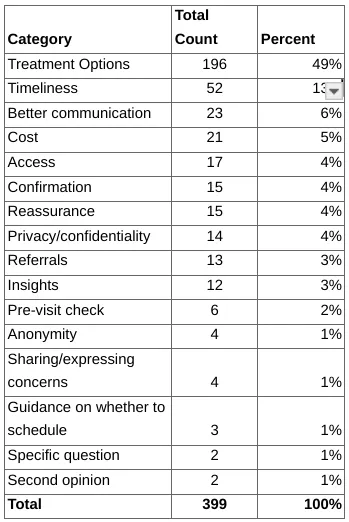
Table 1: Motivation Categories and Definitions
We examined each user free-text feedback and where possible assigned the feedback into one of the above categories of motivation.
Results
The distribution of real world motivations for using an AI doctor based on manual review of all the free text comments from CodyMD users are as follows:
Distribution of User Motivations for using AI Doctor CodyMD
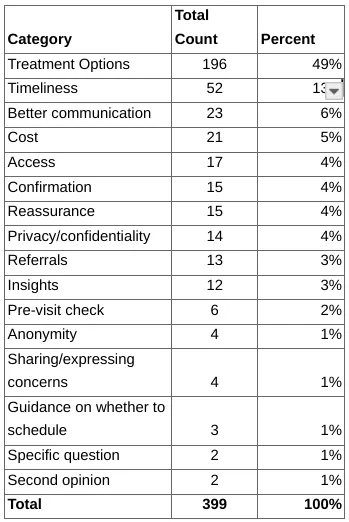
Table 2: User Motivations
Conclusion
This report analyzes the motivations of a large sample of real-world users of an AI doctor. This is important because currently much of the research on AI in healthcare has focused on the theoretical potential rather than the practical applications.(4)
In this report, feedback comments provided by users visiting an AI doctor reveal several critical insights into consumer motivation among those going directly to an AI doctor for support. First, there is a very broad range of motivations for which consumers seek interactions with AI doctors, ranging from the desire for find care provides to the desire for sharing symptoms with a sympathetic listener, to second opinions. Each of these motivations provide an opportunity for further serving the patient directly by refining the AI doctor and adding value at each step in the care process.
The top five reasons for visiting an AI doctor are: identify and connect to possible treatments, timeliness of access to services, more fruitful communication with a medical provider, lower cost care, and more convenient access.
The largest category is the desire for care. Although this should not be a surprise, medical providers often consider the skills and art of diagnosis as what patients most value. But these data clearly reveal that real world users ultimately want to receive care.
A significant portion of users' feedback (6%) indicates they were seeking better communication with a doctor and many commented on their previous poor interactions with real-world doctors. This undermines the conventional wisdom that real-world doctors will always have the upper hand due to personal, human touch.
In conclusion, in the first study of real-world users of an AI doctor, we demonstrate a significant breadth of consumer motivations for using AI doctors, with the majority of those providing interpretable feedback suggesting they seek from AI doctor information related to care and connections to care.
-
Lenharo, Mariana. "Google AI has better bedside manner than human doctors - and makes better diagnoses." Nature 625.7996 (2024): 643–644.
-
Tyson, Alec, et al. "60% of Americans Would Be Uncomfortable With Provider Relying on AI in Their Own Health Care." https://www.pewresearch.org/science/2023/02/22/60-of-americans-would-be-uncomfortable-with-provider-relying-on-ai-in-their-own-health-care/ , The Pew Research Center, (2023).
-
Esmaeilzadeh, P. Use of AI-based tools for healthcare purposes: a survey study from consumers' perspectives. BMC Med Inform Decis Mak 20, 170 (2020). https://doi.org/10.1186/s12911-020-01191-1.
-
Younis, H.A.; Eisa, T.A.E.; Nasser, M.; Sahib, T.M.; Noor, A.A.; Alyasiri, O.M.; Salisu, S.; Hayder, I.M.; Younis, H.A. A Systematic Review and Meta-Analysis of Artificial Intelligence Tools in Medicine and Healthcare: Applications, Considerations, Limitations, Motivation and Challenges. Diagnostics 2024, 14, 109. https://doi.org/10.3390/diagnostics14010109.